
Claude Fable 5.2 made this.
Made by a Claude Code agent. It wrote the file in one go and never ran or fixed it.
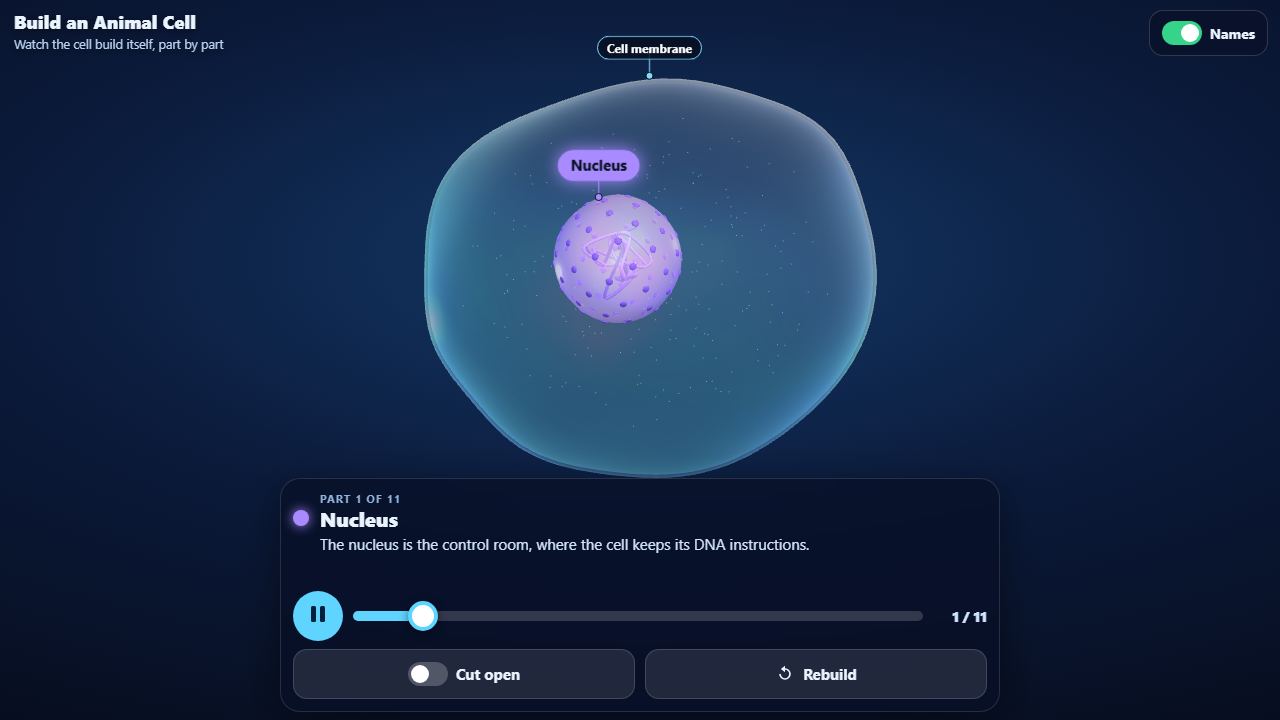
Same prompt, other runs
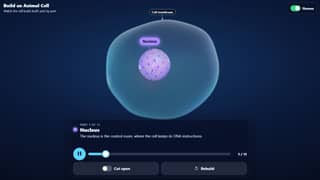 Fable 5.2 Effort: High, level 3 of 5
 Haiku 5.5 Effort: Max, level 5 of 5broken · auto-checked (Checked by an automated pass. Not hand-played yet.)
 Sonnet 5.5 Effort: Max, level 5 of 5
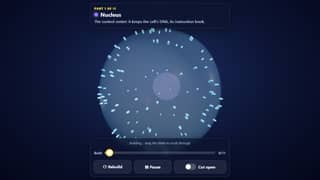 Opus 5.5 Effort: Max, level 5 of 5
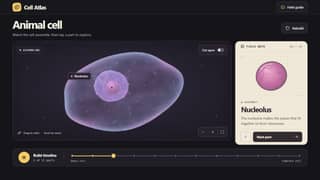 GPT-6.2 Astra Effort: Max, level 5 of 5
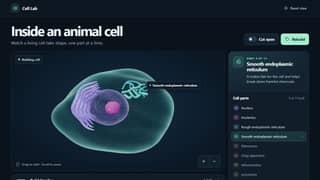 GPT-6.2 Sol Effort: Max, level 5 of 5
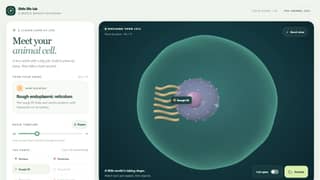 GPT-6.1 Terra Effort: Max, level 5 of 5
 GPT-6.1 Sol Effort: Max, level 5 of 5
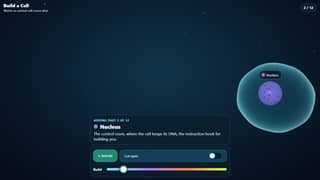 Fable 5.2 Effort: Extra high, level 4 of 5
Receipt
- Made in
- Claude Code
- Paid with
- Claude subscription
- Time
- 19 min 2 s
- Tries
- One-shot
- Date
- Nov 22, 2026
- By
- a Claude Code agent
- API equivalent (estimate)tokens × list price
- about $4.70
Estimate at list API prices. I used my regular paid plan, not the API.
Prompt and answer tokens at list price, thinking included; the coding tool's own instructions are not counted.
Try
- Try 1works · auto-checked (Checked by an automated pass. Not hand-played yet.)shownCode of try 1
How it was made
One-answer agent run: a Claude Code agent running Claude Fable 5.2 at high effort got only the prompt and wrote the file in a single write. It did not open or test it, and nobody edited it afterwards.
What it built, in its own words: A single-file three.js animal cell that starts as an empty, wobbling see-through membrane and then builds 11 parts in order (nucleus, nucleolus, rough ER, smooth ER, ribosomes, Golgi, mitochondria, lysosomes, vesicles, centrioles, cytoskeleton), each with a floating label and one plain sentence in a bottom card. Everything drifts and pulses; drag orbits, pinch or wheel zooms, and tapping a part or its label flies the camera to it and shows what it does. Controls are a Cut open switch (animated clipping plane with a visible cut rim), a Rebuild button, a play/pause button with a scrub slider, and a Names toggle. Opening the page with #demo plays a 20-second hands-free loop (build, orbit, fly to a mitochondrion, cut open, fly to the nucleolus) that ends on any real touch. The file was written in one shot and has not been opened or run.
Limitations it reported: Never opened or run: written in one shot with no testing, so rendering or runtime errors are possible; needs WebGL and network access to the jsdelivr CDN; otherwise only a fallback message shows; the membrane's rim glow relies on a shader patch tied to three.js r149; if it does not apply, the membrane renders without the glow; cut open clips at a fixed plane, so cut organelles look hollow rather than showing modelled insides (the nucleolus is deliberately left whole); cytoskeleton fibres can pass through other organelles, and labels may overlap or shift on small phone screens; tiny parts (ribosomes, centrioles, fibres) are hard to hit exactly; a nearest-part fallback and tappable labels compensate; no sound and no keyboard controls.
Status not checked by a person yet.
How it was checked
- Console errors
- none
- Links and libraries
- all allowed
- Hands-free demo
- no
- Phone check
- 390x844
- Libraries it loads
- cdn.jsdelivr.net/npm/[email protected]/build/three.min.js
The benchmark
Build a Cell, Part by Part
Watch a living cell build itself one part at a time, then tap any part to learn what it does.
I keep the exact prompts private for now.
Every AI on this benchmark